Loading...
Searching...
No Matches
locate_signal.py File Reference
main() shows how to use cross_correlate() and plot_correlation_map(). More...
Go to the source code of this file.
Functions | |
| pl.DataFrame | supply_azimuthal_angle_masks (pl.DataFrame skymaps) |
| Supplies azimuth masks to any sky map (eg time delay maps or correlation maps). | |
| pl.DataFrame | combine_time_delay_maps_and_waveforms (pl.DataFrame masks_and_skymaps, pl.DataFrame waveforms) |
| Prepares a big table that has all the column needed by cross_correlate. | |
| pl.DataFrame | cross_correlate (pl.DataFrame big_frame) |
| Compute the zero-centered normalized cross correlation (ZNCC) and makes correlation skymaps. | |
| [float, float] | _get_true_direction (ROOT.pueo.Dataset dataset) |
| Returns the true signal direction. | |
| None | plot_correlation_map (pl.DataFrame correlation_frame, str plot_name, true_phi=None, true_theta=None) |
| Plots the reult of cross_correlate. | |
Detailed Description
main() shows how to use cross_correlate() and plot_correlation_map().
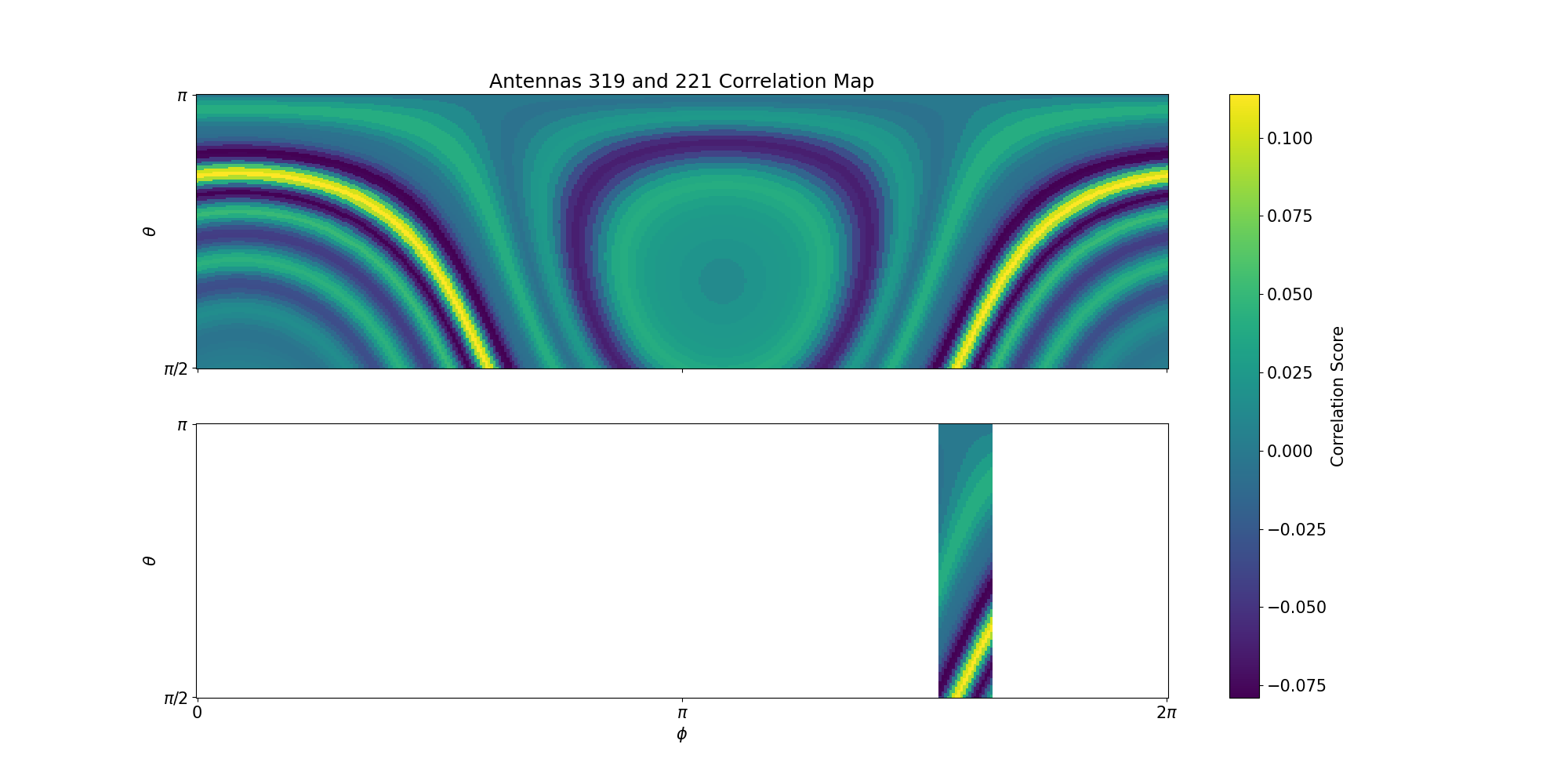
Summing over all antenna pairs, we have
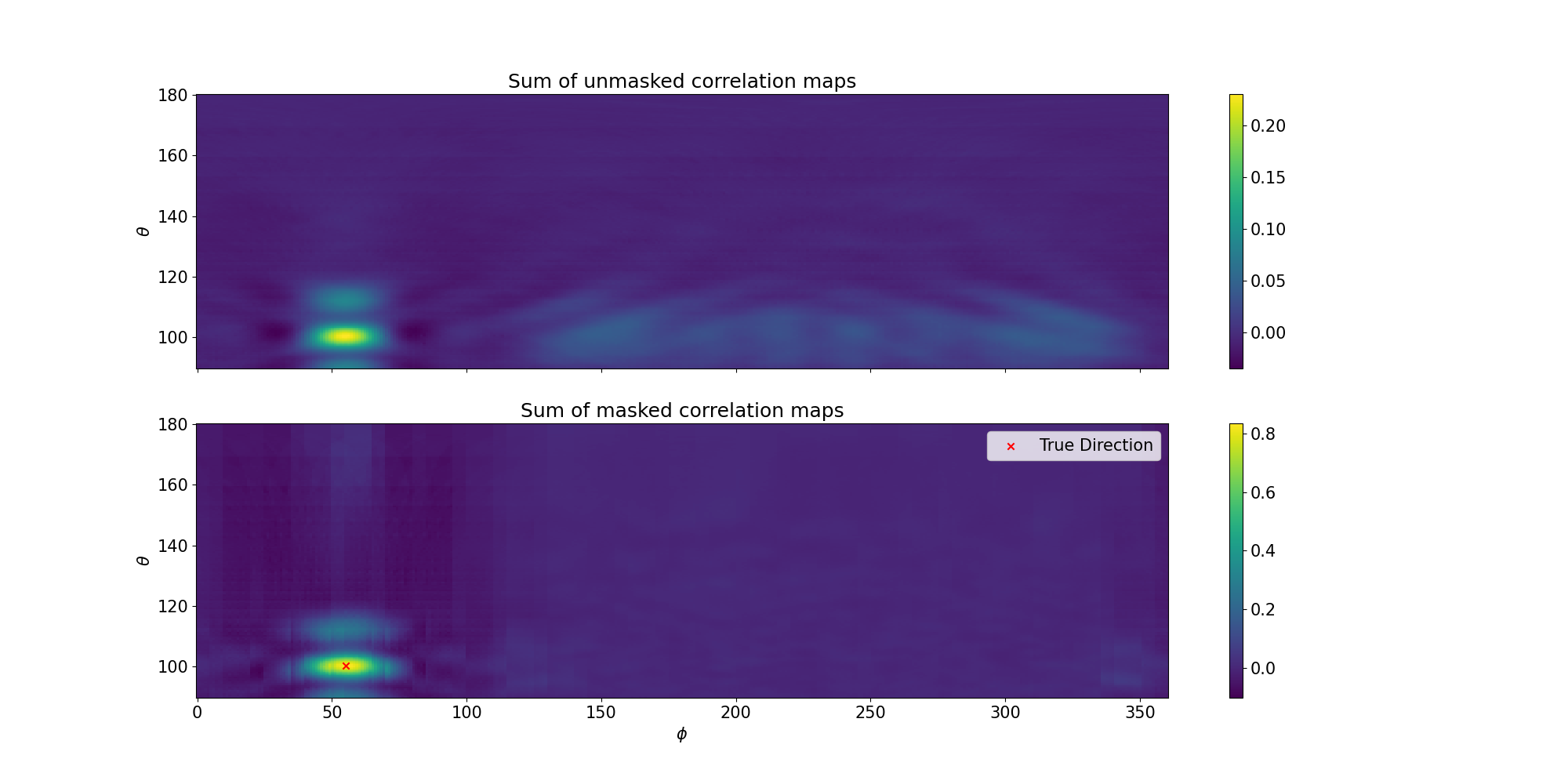
We can see that by masking the individual correlation maps, the total correlation map is less noisy.
Definition in file locate_signal.py.